Sunday, March 4, 2018

Resurrection

I realized it's Lent, but this blog, bless Jesus Christ, can't wait.

Ok, so with that said, I plan to discuss Class Action suits in existence, as well as ways in which how people can connect with attorneys, to seek justice against predatory lenders.

In addition, DeVos - make note: I'm coming after your activities. I mean, they all may be fine and good, fine and good, and fine and dandy, but I wanna make sure, since I fight on behalf of the indentured educated class. I got this stinking awful, awful, awful, sick, sick feeling, YOU DEVOS are not up to any good. We'll see though. We'll see. As your fave boss says. Winkyedwinkwink. 

Also, Jesus would totes be on my side. :) 


Saturday, November 12, 2016

What Is To Be Done? Trump, the Election, and the Student Loan Crises

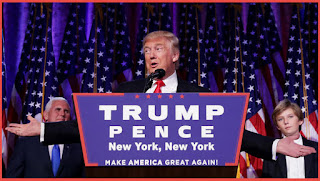
President-elect Donald Trump delivering acceptance speech in New York, NY on November 9 (Photo Credit: Chip Somodevilla/Getty Images


Ever since now President-elect Donald Trump won the GOP nomination, numerous readers, colleagues, and friends have asked me what I think he'd do about the student loan crisis if he became President of the United States. Since the publication of my book in May, Trump winning the GOP nomination, and now also winning the Presidential election, he and his campaign operatives have been relatively mum on this particular crisis or rather crises (its complexity is such that it is not a singular crisis, so I am shifting the way I describe it). In any event, I have tried to find information on actual policy plans to help understand how his administration's higher education policies would impact the following groups:

  •  Prospective college students 
  • Current college students 
  • Other folks, mainly family members, loaded down with either their own debt as well the debt of other borrowers, be it children or even friends (so, in a word, all those co-signers) 
  •  Current borrowers (the indentured educated class of which I am a member!)

So, he has been pretty tight-lipped about the student loan debt crises. That said, when he was in Columbus, Ohio on October 9th, he said in a speech there: "Students should not be asked to pay more on their loans than they can afford.”

“The debt should not be an albatross around their necks for the rest of their lives,” he added.

What's potentially good?

With Trump's overall populist message and remarkably anti-establishment rhetoric the nation heard - quite loud and clear - from both he and his supporters, perhaps there will be policies implemented that will favor borrowers. For example, he has already said that he would make changes to the Income-Repayment program. That program of course is already in place and was launched by Bob Shireman, the former head of TICAS.org many years ago. (And, on another note, there are certainly many Trump supporters who are also drowning in student loan debt and barely making it by as a result).

What's the good news about Trump's plan to make some changes to IBR? Well, there are a few things. For starters, it means he won't be eliminating it, which is probably impossible anyway. Second, he said he'd cap repayment at 12.5% of a borrower's income.

He has also indicated that he'd like to forgive loans that are in the REPAYE program sooner than they currently are in place. His forgiveness plan? 15 years instead of 20 years. Of course, there is still that pesky tax issue, the one in which once the loans are forgiven, the IRS will come knocking on your door with a tax on the total amount forgiven, as the loans are considered a "gift." As I have said before, not to get off topic, Republicans and Democrats alike agree that this fact is a big problem. Since Trump has prided himself on skirting taxes, perhaps we could make an argument on this, well, stupid tax, and he'd help let us off the hook? Who knows  . . .

What's most likely bad?

As I already predicted, given how he prides himself on not being a politician but instead a successful businessman (something that is questionable, but I digress), Trump will most likely try to radically revamp who is the service provider of loans (currently, it's the Federal Government). This means that he and the individual he appoints to be head of the Department of Education will try to privatize the student loan industry. Of course, it already is privatized due to vendors who receive lucrative contracts from the Department of Education in order to service loans.* This issue, as I discuss at length in my book, is a murky one, as the Department of Education doles out servicing contracts to private companies** such as Navient (formerly Sallie Mae), PHEAA, and Nelnet. At this juncture, it is hard to say how this plan - if even successful - would play out. One thing is certain, it won't benefit borrowers or taxpayers if it is "privatized" again. But when it comes to all these players, perhaps the big lenders are nervous with the Trump regime assuming power. Only time will tell. But I know one thing - I'd sure love to be a fly on the wall at Navient, PHEAA, or Nelnet, listening to top executives discussing what the future holds now that Trump has won the election.

One thing is certain, we won't see a debt jubilee under the Trump Regime.

At this point, seeing how all of this unfolds in the next 6 months means it is really a waiting game, whether it's related to the student loan debt crises, immigration, or anything else. That uncertainty, not surprisingly, has led to public fear and has also rocked the markets. We are all well aware now, including President-elect Trump, I imagine, that he is erratic and therefore unpredictable.

Final Thoughts and Following Up

Finally, and I am sure this will be pointed out by some of you, so that's why I am getting it off my chest now, I am being quiet on this post about the other enormous issues that deeply concern me about Trump's election, many of which are deeply personal, particularly since I am a woman, am friends with minorities, and believe in spreading love to my fellow human beings. But since I am speaking about the student loan debt crises, I will refrain in this short essay from sharing my thoughts about those other complex and extremely serious matters. Rest assured, I will write another piece to discuss those topics soon.

Stay tuned for more analysis as President-elect Trump receives the keys to the White House.


FOOTNOTES

*For the sake of keeping this post on point, I am generalizing here, as there are also the collection agencies as well as the Guarantee Agencies who receive contracts, too.

**The Department of Education is the service provider of student loans. That policy change occurred with the passage of the Health Care and Education Reconciliation Act of 2010. To further clarify, this made 100% loans direct loans, thus bringing an end to the FFEL program (meaning that FFEL loans were no longer distributed after that year; however, debt owed to FFEL remain. I myself have several large FFEL loans, along with millions of other borrowers, so that debt remains on the books).

Sources:

Ted Mitchell, Under Secretary, U.S. Department of Education, memorandum, July 20, 2016, "Policy Direction on Federal Loan Servicing." (Accessed online November 12, 2016)

Nerdwallet, "5 Ways President Trump could affect your student loans," Los Angeles Times, November 11, 2016. (Accessed online November 12, 2016)


Wednesday, September 28, 2016

New York Review of Books features Solving the Student Loan Crisis

While I was headed home from a blissful wedding in Rhode Island, a place I consider home, and haven't visited in a decade, I learned that my book, Solving the Student Loan Crisis, would be appearing in an article in the New York Review of Books in October.

The article is titled, "How the Financing of College May Lead to Disaster!," and was written by Rana Foroohar. Here's s snippet:

When the financial industry—banks, hedge funds, loan companies, private equity—gets too involved in any particular activity of the economy or society, it’s usually time to worry. The financial sector, which represents a mere 4 percent of jobs in this country but takes a quarter of all private sector profits, is like the proverbial Las Vegas casino—it always wins, and usually leaves a trail of losers behind. So perhaps alarms should have been raised among both financial regulators and educational leaders when, two decades ago, for-profit colleges began going public on the NASDAQ and cutting deals by which private equity firms would buy them out. Apollo Group, the parent company of the University of Phoenix, was one of the first, becoming a publicly traded corporation in 1994, at a time when the university had a mere 25,000 students. By 2007 the university had expanded to 125,000 students at 116 locations. This was growth pushed by investors who viewed students as federally subsidized 'annuities'  that, via their Pell Grants and student loans, would produce a fat and stable return in the form of tuition fees.
Foroohar discusses six other books, along with mine, in this piece. You can read the rest of it here. 

Wednesday, July 6, 2016

Clinton Embracing College Plan Proposed By Sanders

Here's the story from CNN. This means if she gets into office, we push even harder. We push for this promise to be fulfilled and much, much more. We push for changes, immediate changes, for those of us who are part of the indentured educated class.

Thursday, June 2, 2016

Online Interview About Writing My Book, Solving the Student Loan Crisis

I was recently interviewed about the process of writing my book over at  Book Marketing Buzz.

Here's a snippet:

1.      What inspired you to write your book?
There were several things that inspired me to write Solving the Student Loan Crisis: Dreams, Diplomas & a Lifetime of Debt. First, I was on my way to becoming a professor, so I spent a lot of time in academia. The topic of student loan debt came up often. I myself am also a debtor, something I talk about openly in the beginning of the book. In fact, my student loan debt, at least in part, led to the demise of my marriage, one that lasted close to 10 years. But the topic also relates to my beliefs and commitment to social justice.
When I left academia, I went into publishing, and shortly thereafter, I launched a blog called, All Education Matters. This blog was originally intended to help me stay connected to academia and explore all sorts of intellectual ideas (hence the reason behind its name). However, shortly after I launched the blog or right around that time the banks were bailed out by the US government. There was a lot of public outrage, as many here will recall. So, a lot of people began asking, “Well, if the banks were bailed out, what about students, too?” This is part of what inspired me to begin exploring student loan debt, and that opened a huge can of worms. 

You can read the rest of the interview here. 

Wednesday, May 25, 2016

Forgive New Farmers of Their Student Loans?

Apparently higher ups at Clif Bar think that Congress should forgive student loans for young farmers.

In a recent Marketwatch article, the reporter noted that, the producers of the organic health bars "are urging Congress to pass the Young Farmer Success Act, a bill introduced last year that would allow farmers to have their student loan debt wiped away after 10 years of payments. Clif Bar is one of the biggest companies signing on to a letter drafted by the American Sustainable Business Council, of which the company is a member, asking Congress to enact the bill."

These calls for forgiveness by executives at large, well-known companies such as Clif are noteworthy. In some ways it is similar to the way in which Fidelity now offers employees the perk of putting money towards paying of their student loan debt ($10,000 is the max for each employee).  The program is popular, too. 5,000 employees at Fidelity have already signed up for the loan program as a new benefit.

It seems more businesses are paying attention to the student loan crisis, and executives have to be aware that those who are employed by them, and heavily indebted, are not nearly as productive as they could be with this financial stress hanging over their heads.

While my book offers specific solutions that aren't related to the private sector, these responses to the crisis in that area are encouraging. Of course, it is not the solution, but it is a point in the right direction. And if you purchase my book, you will find that I offer a set of solutions, as the crisis is too complex to come up with just one to solve it.

Thoughts? 

Tuesday, May 24, 2016

Campaign for Free College Tuition's Email Regarding My Publication - "A New Paradigm: Solving the Crisis"


The Campaign for Free College Tuition (CFCT) sent out an email earlier today to their followers about the fact that whether or not you're Republican or Democrat, or anything else for that matter, it is clear we agree on something key about higher education: the student loan crisis is out of control.

In this note, my book was mentioned, too, as the President of CFCT, Morley Winograd, recently wrote a 5-star review about it on Amazon.com. 

Here's the full email below:

“Insanity is doing the same thing over and over again and expecting a different result” – Albert Einstein

We are tired of a system that continues to do the same thing while expecting a different result. Regardless of your political affiliation, your president candidate of choice, your age, and where and when you went to college, record student debt – averaging $37,173 for 2016 college graduates – demonstrates that our current education finance model is unsustainable. We need to do something different, we need a solution, we need free college now!

A recently released study by University of Illinois Professor Min Zhan found that individuals with student debt – both college graduates and drop-outs alike – had a lower net worth, fewer financial and nonfinancial assets, and homes with lower market values when they reached age 30 than those who graduated without debt.  She indicated that these findings suggest "that in addition to negatively impacting young people in the short term, education loans may also compromise their financial well-being over the longer term."

Cryn Johannsen, a member of CFCT’s Advisory Committee and the author of Solving the Student Loan Crisis, similarly reports that “there are also vast numbers of young adults with student loan debt who cannot become productive citizens in our economy because they are barely getting by each month as they pay off their student loans.”  Her newly released book is a must read and, according to CFCT President Morley Winograd in a review on Amazon.com, “tells you everything you always wanted to know about the nation’s student debt crisis but were afraid to ask. By combining personal poignant stories on the impact of student debt, including in the author's own life, with the cold hard truths of how this crisis came about, Cryn Johannsen has delivered a devastating indictment of our current system of financing higher education. This book makes it clear that only a complete transformation of how we pay for higher education in the U.S. can fix a very broken system and save the next generation of Americans from the scourge of student debt.”

It is obvious that we need a new paradigm. We need free college tuition and we need your help to make it happen. Even from home you can make a difference by liking us on facebook, following us on twitter, and continuing to spread the message of free college tuition. Together we will.   Sincerely,

Norma Orozco
Campaign Director
Campaign for Free College Tuition
I'm greatly appreciative of Morley's endorsement, as well as the work that CFCT is doing on behalf of prospective and current students, and I wanted to share this information with all of you here.